Introduction to Multi-Agent AI Systems
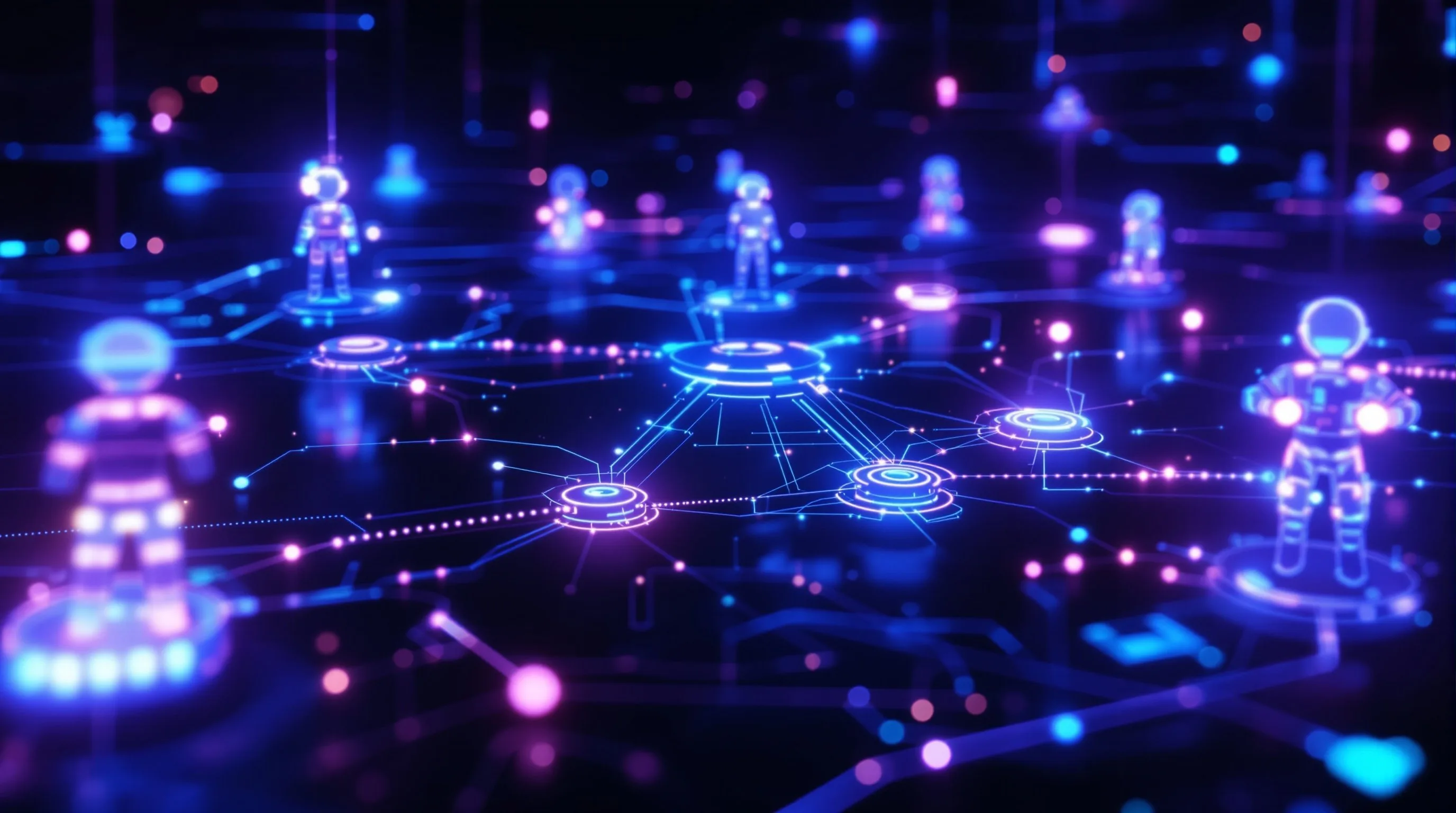
Multi-agent systems represent the next evolution in AI automation, where multiple specialized AI agents collaborate to accomplish complex tasks. This guide covers essential architecture patterns and best practices.
Core Architecture Patterns
1. Orchestrator Pattern
A central orchestrator agent coordinates specialized worker agents. Best for hierarchical workflows with clear task delegation.
2. Peer-to-Peer Pattern
Agents communicate directly with each other without central coordination. Suitable for distributed, resilient systems.
3. Blackboard Pattern
Agents share a common knowledge base, reading and writing information as needed. Effective for complex problem-solving scenarios.
Key Design Considerations
- Agent Specialization: Design agents with focused capabilities rather than general-purpose functionality
- Communication Protocols: Define clear interfaces for agent-to-agent communication
- State Management: Implement robust mechanisms for tracking system and conversation state
- Error Handling: Plan for agent failures and implement graceful degradation
- Observability: Build comprehensive logging and monitoring from the start
Implementation Tips
Start with the simplest architecture that meets your requirements. Add complexity only when necessary. Ensure clear documentation of agent responsibilities and interaction patterns.
SeoniX AI specializes in designing and implementing multi-agent systems for enterprise applications. Contact us to discuss your multi-agent architecture needs.